Summary
Summer radon tests can be misleading when windows and exterior doors are left open. This blog explains why closed-house conditions matter, how radon levels in Minnesota and the Dakotas compare to the rest of the country, and what homeowners can do to get a more accurate result. It also covers when to consider radon mitigation and how active sub-slab depressurization helps lower radon levels in the home.
Radon Testing in Summer: Why Open Windows Can Hide a Problem
You set the radon kit on a basement shelf, leave it three days, and read the number. It’s a simple test, and in the summer, with the windows open, it’s also easy to come away with a number that reads lower than the radon your family breathes the rest of the year. The kit isn’t wrong. Open windows and warm-weather conditions can pull a short-term reading down, and a low result under those conditions can leave you reassured about a home that isn’t as safe as it looks. The odds of that here are not small: across Minnesota and the Dakotas, radon runs among the highest in the country.
How Common Radon Really Is in Minnesota and the Dakotas
In Minnesota, more than two in five tested homes come back with radon at a level the state considers a serious health risk. The statewide average is about 4 picocuries per liter, more than three times the national average, and roughly 72 percent of Minnesota counties sit in the highest radon category the state tracks.
The Dakotas run higher still. All of North Dakota carries the EPA’s Zone 1 rating, the highest it assigns, and about 63 percent of homes there test above the level where the EPA says to take action. A 2025 study from Harvard’s School of Public Health mapped the worst radon in the country to South Dakota and North Dakota.
Part of the reason is underfoot. The soil and rock across the region give off more radon than most of the country does. The rest is how homes here are lived in. Through the long heating season, a closed, warm house draws that gas up out of the ground and holds it, and the finished basements many families use as bedrooms and living rooms sit right where it collects.
None of that tells you your own number. Radon can differ sharply between two houses on the same street, depending on the soil under each one and how each is built. A neighbor’s low test says nothing about yours.
Why a Summer Radon Test Can Give You a False Sense of Safety
A short-term radon test only measures accurately under what the EPA calls closed-house conditions: windows and exterior doors kept shut for 12 hours before the test and through the testing period, so the radon indoors isn’t watered down by outside air. Summer is when most homes break every part of that. Windows stay open, doors come and go, and the air conditioning and warm soil shift how air moves through the house. A kit run that way can read well below what the same home would show in January.
The trap is what a low summer number does to your judgment. It reads like an all-clear, so the test goes in a drawer and the question feels settled, when all it really captured was the house at its most ventilated. The reading you actually care about is the one from the closed-up heating season, when radon climbs and your family is shut inside breathing it.
It doesn’t always run one direction, either. Usually open windows dilute the reading, but an open window upstairs can pull more radon up into the basement through the stack effect and push a reading higher than it should be. The takeaway isn’t that summer tests read low. It’s that a test run with the house open doesn’t reflect what you actually breathe, in either direction, so the number can’t be trusted to tell you where you stand.
How to Get a Radon Result You Can Trust
If you test short-term in summer, hold closed-house conditions: shut the windows and exterior doors 12 hours before you start and keep them shut through the test, opening them only to walk in and out. Run the AC normally if you want, since a system that recirculates indoor air is fine, but skip the window units and box fans that pull air in from outside. Put the kit in the lowest level you actually use, a finished basement bedroom or family room, set about knee to waist height, away from drafts, exterior walls, and humidity.
A long-term test takes the seasonal guesswork out of it. Left in place for 90 days or more, it averages the highs and lows across changing weather and gives you a number closer to what you breathe year-round. If you’d rather have one clear answer sooner, test short-term during the heating season, when a closed, heated house shows radon near its worst and tells you the most about your real exposure.
Whichever route you take, one test is a starting point, not a verdict. The EPA recommends confirming a high short-term result with a second test before you act on it, and any home that’s gone years without a test is worth checking regardless of the season. A reading you trust is the one good decision everything else depends on.
What to Do If Your Radon Level Is High
If a confirmed test comes back at 4 picocuries per liter or higher, the EPA recommends fixing the home, and between 2 and 4 it’s worth considering.
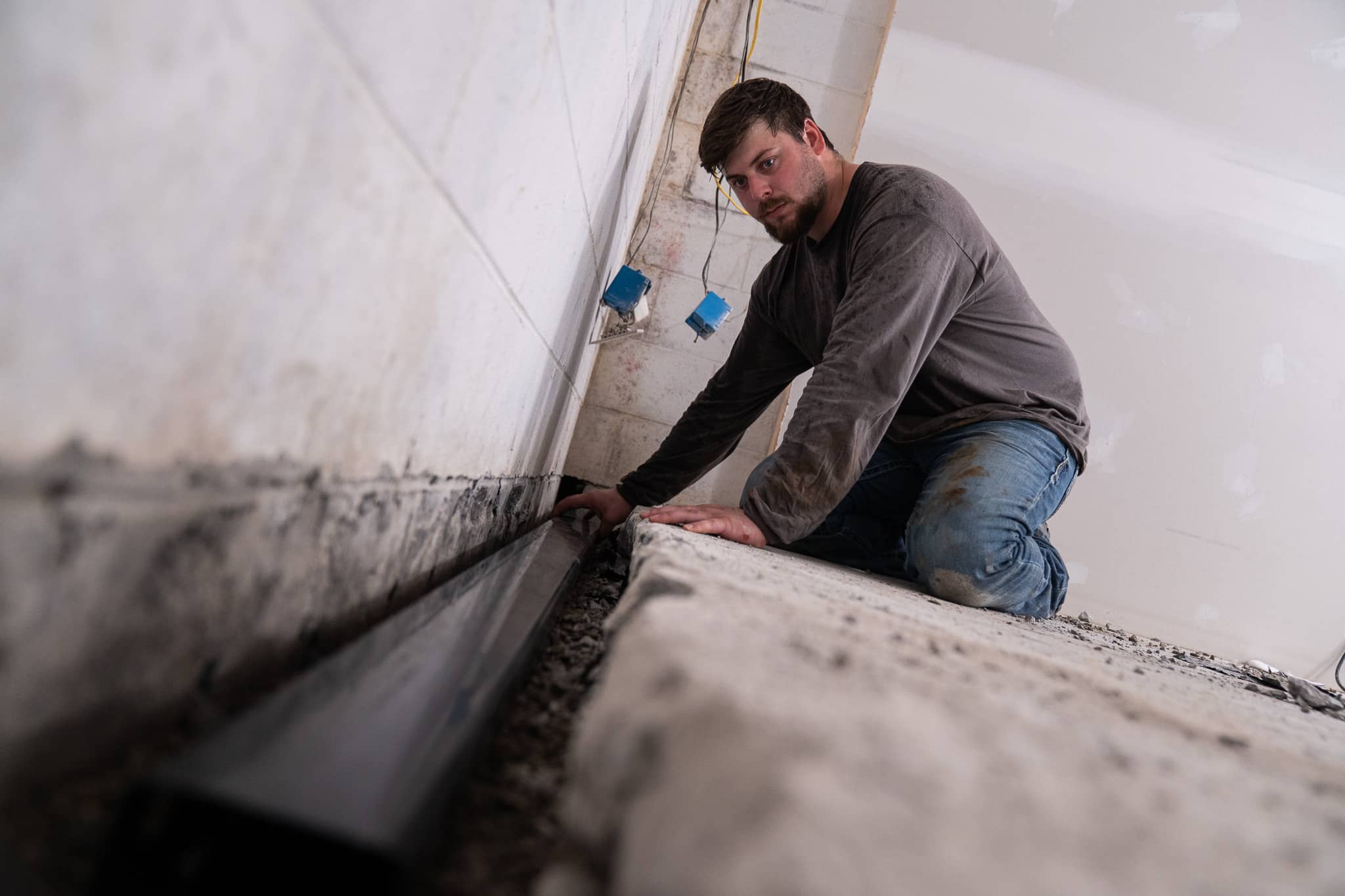
The good news is that high radon is a solved problem. It doesn’t mean leaving the house or sealing it up room by room, and sealing cracks alone won’t do it. The EPA is clear that sealing by itself doesn’t lower radon enough to rely on. What does work is active sub-slab depressurization. A pipe is run through the slab into the crushed rock or soil underneath, and a continuous fan draws the radon gas up from below the foundation and vents it above the roofline before it can enter the house. Done right, it pulls the source out from under the home rather than chasing the gas around inside it, and it brings most homes well below the action level.
SafeBasements installs these radon mitigation systems across Minnesota, North Dakota, South Dakota, and Wisconsin. A high reading isn’t an emergency you have to act on tonight, but it isn’t something to sit on either, especially in a basement bedroom or a room anyone uses every day. Once a system is in, you test again to confirm the level dropped and then keep an eye on it over time.
If your summer radon test came back high, or if you tested with the windows open and aren’t sure the result tells the full story, SafeBasements can help you take the next step. Our team installs active radon mitigation systems that draw radon from beneath the foundation and vent it safely outside, helping lower the level in the living space above.
Schedule a radon mitigation estimate with SafeBasements today and get a clearer path toward a safer, healthier home.