Quick Summary:
- Saturated spring soil presses laterally against basement walls, causing them to deflect inward, typically at the midpoint where the wall has the least support.
- The first visible sign is a horizontal crack running across the middle of the wall, following a mortar joint in block foundations or running straight across poured concrete.
- Water entering at mid-wall through a specific crack is a different problem than water seeping in at the floor, and treating it as a drainage issue alone leaves the structural problem unaddressed.
- A bowing wall that is caught early has more repair options and is a more straightforward job than one that has been moving for several seasons.
- SafeBasements repairs bowing walls using carbon fiber straps for minor deflection, SafeBase Wall Anchors for moderate cases, and the SafeBase Waler Beam System for severe deflection, all backed by a lifetime transferable warranty.
- Free inspections are available across Minnesota, North Dakota, South Dakota, and Wisconsin.
Why Spring Moisture Is the Leading Cause of Bowed Basement Walls in the Upper Midwest
Winter in Minnesota, North Dakota, and South Dakota puts a tremendous amount of frozen water into the ground. When temperatures rise in spring, that water has to go somewhere. Some of it drains away, some evaporates, and a significant amount of it saturates the soil directly against basement walls. That saturated soil is heavy, and it presses against foundation walls with a force that builds over weeks as the thaw progresses.
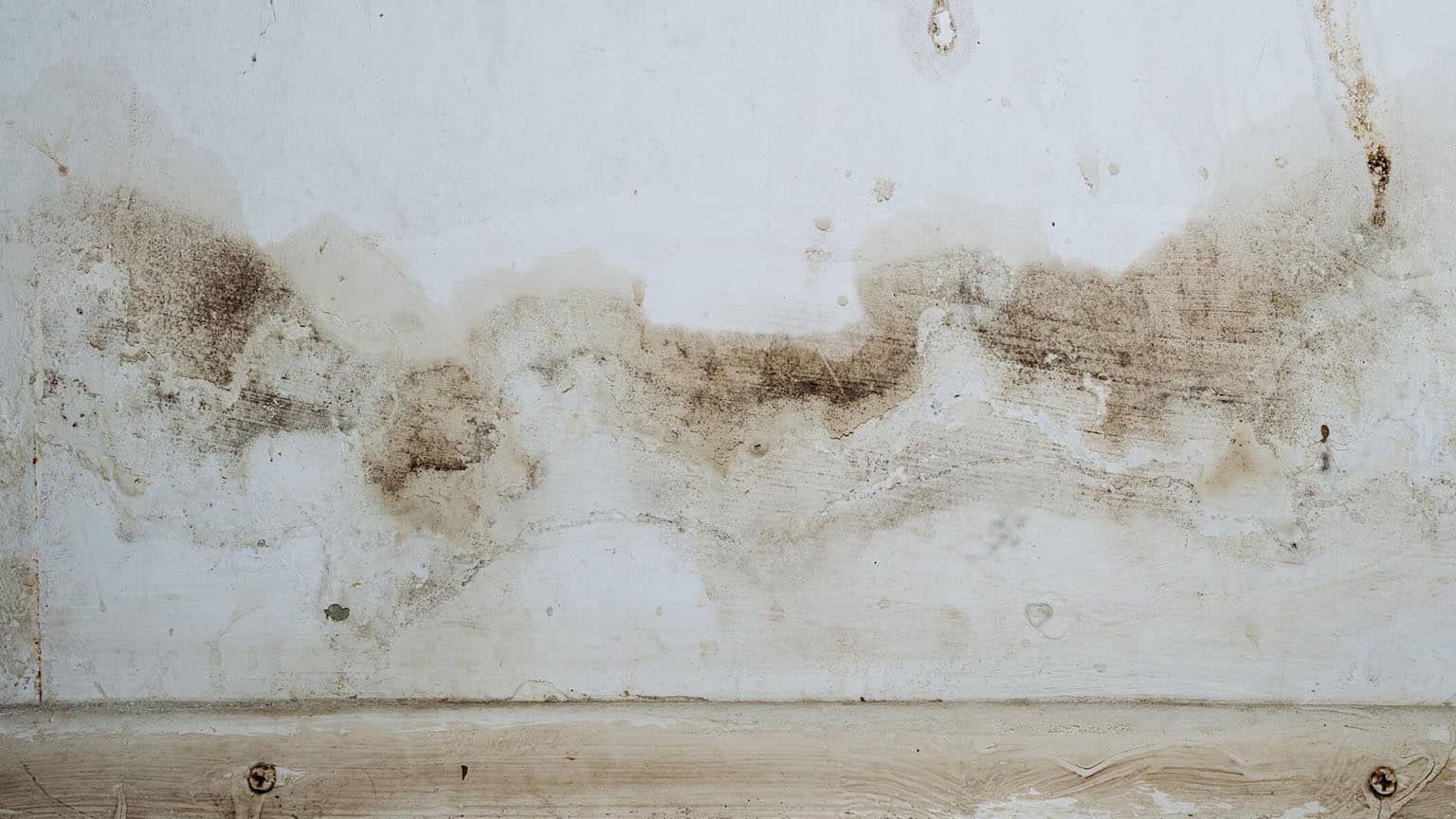
Most homeowners who notice water in their basement after snowmelt assume the fix is waterproofing. That’s often the right call. But water that’s entering through a cracked or deflecting wall is telling a different story, and treating it as a waterproofing problem without addressing the wall can leave the more serious issue unresolved. Understanding what spring moisture actually does to a foundation wall is the difference between fixing a symptom and fixing the cause.
How Saturated Soil Pushes Basement Walls Inward
Basement walls are designed to carry weight from above, not to resist sustained pressure pushing in from the side. When soil outside the foundation absorbs enough water, it gets heavy and starts pressing against the wall. The wall deflects inward, usually at the midpoint where it has the least support, and the first visible sign is a horizontal crack running across the wall.
That crack means the wall has already started to move. Block foundations tend to show it along a mortar joint. Poured concrete walls develop a straight horizontal crack. In both cases the wall will continue to deflect as long as the pressure outside remains, and saturated spring soil in Minnesota and the Dakotas doesn’t drain quickly.
Wet Basement or Bowing Wall: What Homeowners Should Look For
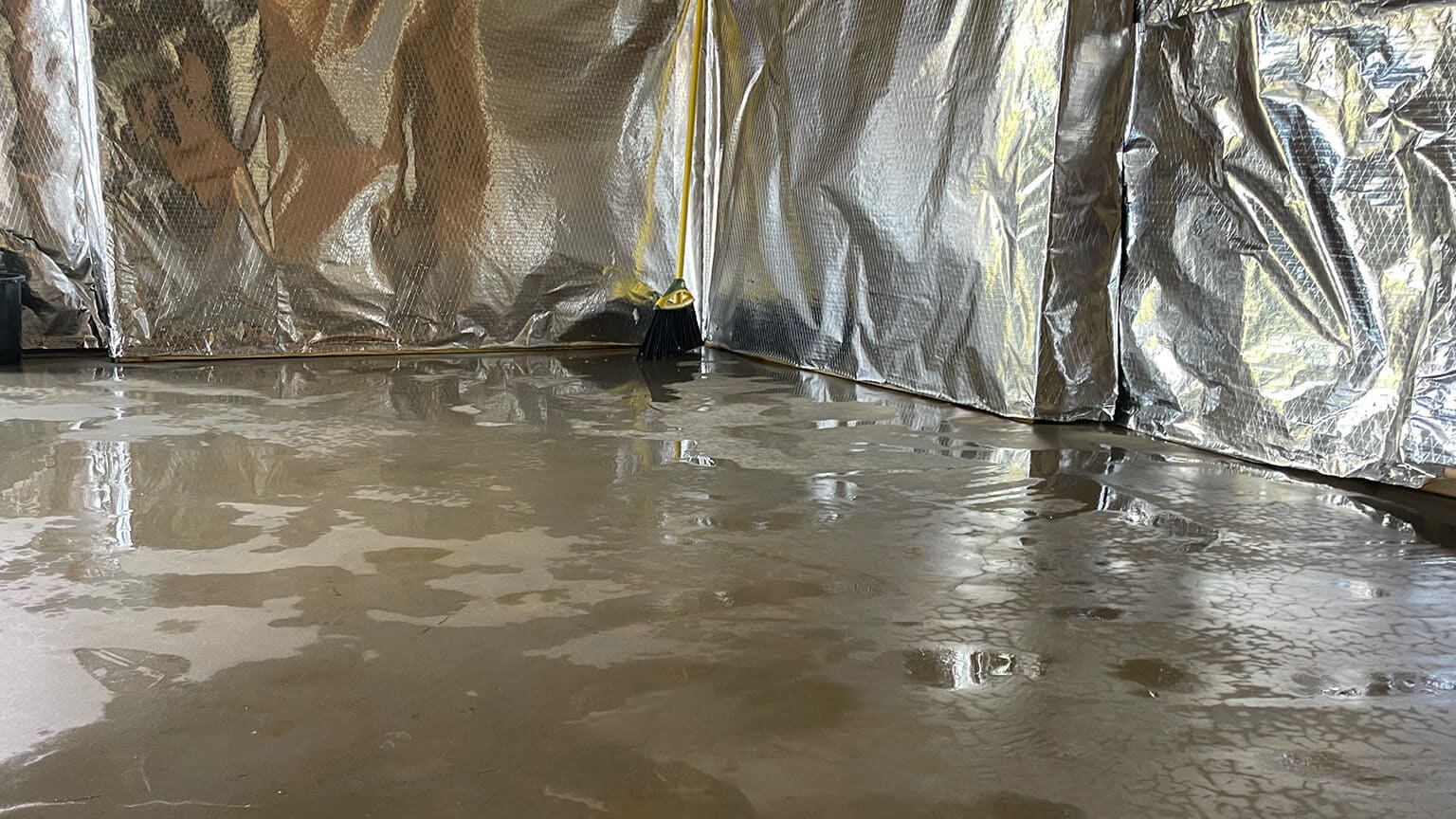
Water in a basement after snowmelt is easy to attribute to a drainage problem, and often that’s exactly what it is. But water coming in through a wall that is actively moving is a different situation with a different repair, and the signs that separate the two are worth knowing before calling anyone. A drainage problem and a bowing wall can exist in the same basement at the same time, which is part of what makes it easy to address one and miss the other. The distinction matters because waterproofing a wall that is under pressure doesn’t stop the movement.
Signs the problem is primarily drainage:
- Water seeping up through floor cracks or at the floor-wall joint
- General dampness along the lower portion of walls
- Water entering broadly rather than through a specific crack
- A sump pump running constantly during heavy rain or snowmelt
Signs a wall may be bowing:
- A horizontal crack running across the middle section of the wall, especially one that follows a mortar joint in a block foundation
- Visible inward curve when you sight down the length of the wall
- Water entering at mid-wall through a specific crack rather than seeping in at the base
- A crack that has visibly widened since last spring
Why Waterproofing Alone Won’t Stop a Bowing Basement Wall
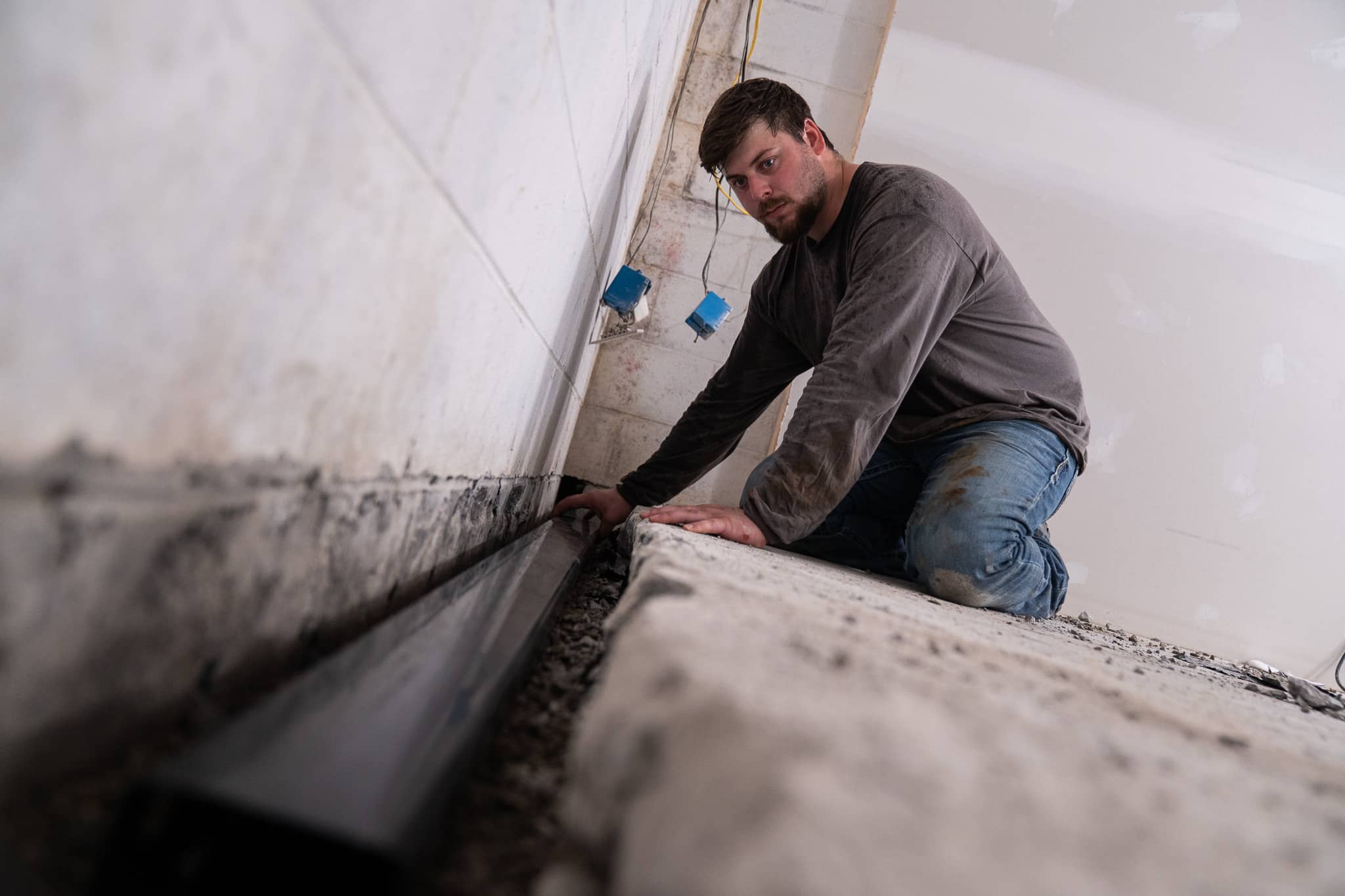
A basement waterproofing system is designed to manage water. It intercepts groundwater, directs it to a sump pump, and removes it from the home. What it doesn’t do is address the soil pressure that is pushing against the wall from outside. A wall that is actively deflecting needs to be stabilized before anything else, because the movement doesn’t stop just because the water inside the basement is being managed.
The other factor is timing. A bowing wall that gets addressed early, while the deflection is still minor, has more repair options available and is generally a more straightforward job than one that has been moving for several seasons. Each spring adds another cycle of pressure. Each cycle moves the wall a little further from where it started. At a certain point the wall has deflected enough that the repair scope changes considerably, and in severe cases full wall replacement becomes the conversation instead of stabilization.
A free inspection from a Certified Foundation Specialist is the clearest way to know where a wall stands. SafeBasements assesses the degree of deflection, the wall construction, and the soil conditions before recommending a repair approach, and that assessment doesn’t cost anything.
How SafeBasements Repairs Bowing Basement Walls
The right repair for a bowing wall depends on how far it has deflected and what it’s made of. SafeBasements has been repairing bowing walls across Minnesota, North Dakota, South Dakota, and Wisconsin for over 35 years, and their approach starts with a free inspection that determines which system fits the situation. All repairs are backed by a lifetime transferable warranty, and homeowners can review their record with customers through their Better Business Bureau profile before scheduling. The three systems SafeBasements uses cover the full range of bowing wall severity.
- Carbon fiber straps. For walls with minor deflection, carbon fiber straps bond directly to the wall surface, stop the movement, and can be painted over once installed. No excavation required.
- SafeBase Wall Anchors. For more significant deflection, wall anchors reach into stable soil outside the foundation and can be tightened over time to gradually bring the wall back toward its original position.
- SafeBase Waler Beam System. For severe cases, vertical steel posts anchor to the floor and ceiling framing with horizontal steel beams across the damaged section. It stops movement immediately and can be paired with wall anchors for additional correction.
Don’t Wait Until the Soil Dries Out
Bowing walls are easiest to assess while the soil is still saturated and the pressure on the wall is at its peak. Once the ground dries out in late spring, some of the evidence becomes harder to read, but the damage that accumulated doesn’t go away.
SafeBasements offers free inspections across Minnesota, North Dakota, South Dakota, and Wisconsin. Schedule your free estimate before the season changes and find out exactly what your walls are dealing with.