Compare polyurethane foam lifting and traditional mudjacking
Sunken concrete is more than a cosmetic issue. Whether it’s your driveway, patio, or garage floor, uneven slabs can create safety hazards, interfere with drainage, and lower the overall value of your home.
When it comes to fixing the problem, most homeowners end up comparing two options: mudjacking and polyurethane foam lifting. Both are used to raise settled concrete, but the materials, installation process, and long-term results are completely different.
At SafeBasements, we’ve repaired thousands of slabs across the Midwest and Great Plains. We’ve worked with both methods in the past, and today we rely on polyurethane foam because it consistently delivers stronger, cleaner, and more permanent results.
In the guide below, we’ll walk through the differences so you can make the best choice for your home.
What Is Mudjacking?
Mudjacking is one of the oldest concrete lifting techniques still in use today. It works by drilling several large holes into the surface of the slab, usually about 1 to 2 inches wide, and pumping in a slurry made of water, soil, and cement. As the mixture flows into the voids beneath the slab, it builds pressure and pushes the concrete back into position.
While mudjacking can raise concrete temporarily, the material it uses is extremely heavy, up to 100 pounds per cubic foot. That added weight can put even more stress on the weak soil below, leading to future settlement. And because the slurry is not waterproof, it may break down or wash out over time, especially in areas with high moisture or freeze-thaw conditions.
It’s a short-term fix in many cases and one that often needs to be repeated.
What Is Polyurethane Foam Lifting?
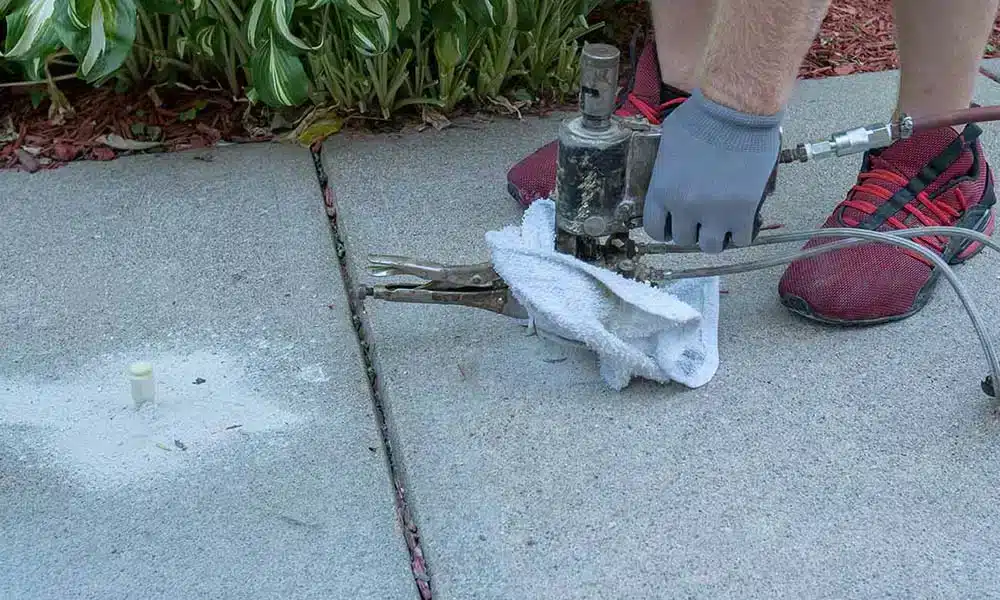
Polyurethane foam lifting takes a different approach to concrete repair. Instead of relying on heavy materials, it uses a lightweight, expanding foam that’s designed to fill gaps and raise concrete from below without putting extra stress on the ground.
The process is straightforward. Small coin-sized holes are drilled into the slab, and a specialized foam is injected underneath. As it expands, it lifts the concrete back to a stable position. The foam sets quicklym usually within 30 minutes, and once it cures, it stays put. It doesn’t break down in water, it doesn’t erode, and it doesn’t sink the way heavier materials can.
At SafeBasements, we use foam because it solves the problem without creating new ones. It’s cleaner, faster, and far more reliable in the types of soil and moisture conditions we see across this region.
Mudjacking vs. Polyurethane Foam Lifting: What You Need to Know
If you’re comparing concrete lifting methods, it’s important to look at how they perform—not just on the day of installation, but years down the line. Here’s how mudjacking and polyurethane foam lifting stack up across the most important categories:
| Category | Mudjacking | Polyurethane Foam Lifting |
| Installation Method | Requires drilling large holes (1–2 inches) and injecting a cement-based mixture under the slab. | Uses small holes (about ⅜ inch) to inject a lightweight expanding foam. |
| Curing Time | Slurry takes up to 24–48 hours to harden and support traffic. | Foam cures in 15–30 minutes. Areas are typically usable the same day. |
| Accuracy | Can lift unevenly or overshoot due to inconsistent material flow. | Foam expands in a controlled way for precise, even lifting. |
| Material Weight | Adds significant weight to already unstable soil, up to 100 lbs per cubic foot. | Weighs only a few pounds per cubic foot, reducing the risk of future settlement. |
| Water Resistance | Slurry is porous and can degrade or wash out over time. | Foam is waterproof and designed to stay in place long-term. |
| Cleanliness | Messier process with more surface cleanup needed after injection. | Cleaner application with less disruption to landscaping or nearby surfaces. |
| Expected Lifespan | Often a short-term fix that may need repeating. | Long-term solution with minimal maintenance required. |
Which Method Is Better for Your Home?
Mudjacking still has its place. But in most situations, polyurethane foam lifting offers a better long-term outcome. It’s faster, more accurate, and far less invasive. And unlike mudjacking, it doesn’t add extra weight to already compromised soil.
At SafeBasements, we’ve worked with both methods. We’ve seen how foam performs over time in the types of conditions common to our region. Conditions like expansive soils, freeze-thaw cycles, and water intrusion. That’s why it’s our preferred solution for lifting and stabilizing sunken concrete.
If you’re looking for a repair method that lasts and avoids the mess, weight, and repeat work of older techniques, polyurethane foam is the smarter choice.
Get the Right Fix for Your Concrete
If your concrete is sinking or starting to separate, don’t wait for it to become a hazard. At SafeBasements, we use polyurethane foam lifting to restore stability without the disruption or weight of traditional mudjacking.
Our team serves homeowners across the Midwest and Great Plains with proven solutions backed by years of experience. We’ll inspect the problem, walk you through your options, and deliver a repair that’s built to last.
Schedule a free estimate today and see why more homeowners are choosing foam over mud.